
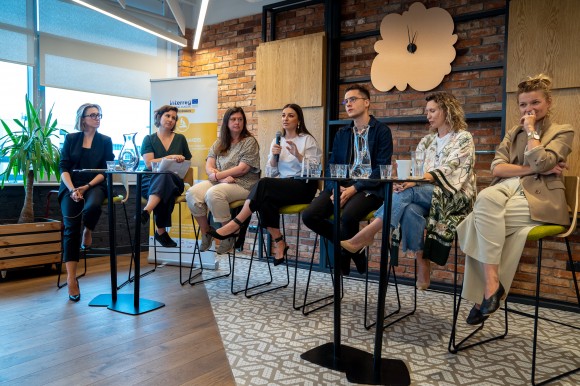
The Ethical Fashion Hackathon, dedicated to developing social innovations for the fashion industry, took place on July 8 and 9, 2019. The event was organized by the Network of Entrepreneurial Women and its partners, with the involvement of the Cooperation Fund Foundation and the Regional Social Policy Center in Poznań – Polish partners of the Social(i)Makers project. The workshop portion of the Ethical Fashion Hackathon was preceded by a debate addressing key issues related to the circular economy, ethical fashion, and conscious shopping. The aim of the discussion and broad approach was to define the challenges facing the fashion industry and then design innovative solutions to address them. Ethical Fashion Hackathon participants sought innovative solutions to the following challenges:
Public education – consumer self-awareness / ethical fashion stereotypes / the role of media in education
Producer transparency – working conditions in factories / product composition transparency / waste management
Legal regulations – mandatory transparency / law enforcement / preferential treatment for environmentally friendly solutions
Recycling – production waste / reuse / conscious donation
Technological solutions – available solutions / reuse / alternative fabric sources
As a result of many hours of work by working groups, seven final innovative projects were developed:
The concept of an innovative network of second-hand stores with unique design, offering a selection of clothing from the Polish market and tailoring services for purchased garments.
An innovative online marketplace connecting sewing workshops with potential buyers of post-production waste, also serving an educational and inspirational role – how to creatively reuse post-production waste. An online social platform for local social educators in the field of ethical fashion, providing all the necessary knowledge to spread the idea of responsible fashion in one place.
A concept for a pop-up store in Chałupy, tailored to the local community, for a responsible clothing brand that aims to provide unobtrusive education to its target group.
A broad social campaign for teenagers, promoting the use of second-hand clothing in styling.
A concept for news reports on Polish fashion revolutionaries who are changing consumer awareness and dispelling stereotypes for breakfast television.
An idea for a series of workshops for young people, educating on the topics of responsible fashion, conscious consumption, and breaking stereotypes.
One of the projects has a chance of being implemented.
