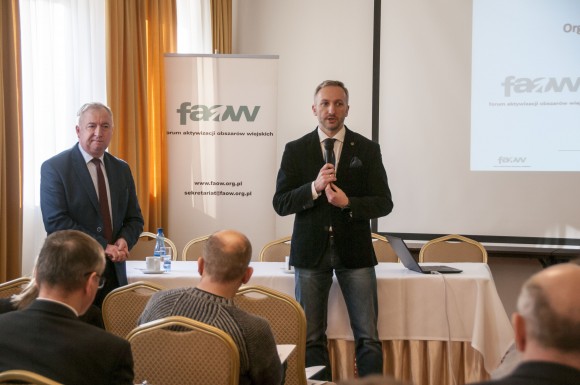
The main goal of the project is to enhance the expert competencies of NGO representatives from rural areas and small towns, to the extent necessary for proper participation in the lawmaking process. 320 NGO representatives are to acquire competencies in legislation and the lawmaking process.
The scope of competence development will include areas of law particularly relevant to rural organizations, as well as general topics (including commercial law, economics with elements of industrial policy, labor law, business economics, financial analysis).
The specific objectives are:
- increasing the competences of 400 representatives of rural non-governmental organizations from all over Poland to participate in the law-making process;
- increasing the interest of rural organizations in participating in the law-making process;
- building the capacity to further improve the competences of rural organisations to participate in the law-making process (including providing 300 people with training/consulting in the field of digital competences).
- The project aligns with the specific objective of the Operational Programme for the Development of the Economy (PO WER), "Strengthening the capacity of entities involved in the lawmaking process at the national level." Improving the competences of rural organizations will enable them to participate in the lawmaking process at the national level, a process in which they have previously participated only to a limited extent. The scope of legal acts affecting rural residents is very broad, and greater involvement of rural organizations will significantly improve the lawmaking process and its quality. The project will also contribute to building an expert base for non-governmental organizations operating in rural areas and small towns.
The project is aimed at NGOs operating in rural areas and small towns, estimated at 31,000-43,000 in Poland. These organizations differ significantly from those operating in cities in terms of both their scale of operations and thematic areas. A significant number of rural organizations are very small, with budgets of less than 10,000 PLN per year, employ no staff, and rely primarily on volunteers. The majority of these organizations' revenues come from local governments. Most rural organizations declare regional and local development as their primary focus, followed by social welfare, culture and the arts, and then education and upbringing.
A study conducted by FAOW to prepare the funding application revealed that most rural organizations had not yet participated in lawmaking. Of those that did, over half had participated in lawmaking at the local or regional level. Less than one-third of rural organizations had experience in lawmaking at the national level.
The project will contribute to strengthening rural organizations by improving expert competencies. This will enable them to acquire the long-term skills to independently seek out information about legal acts and participate in the lawmaking process. Thanks to the explanations provided during the training and practical skills, this knowledge will develop and enrich over time. Furthermore, thanks to the training of trainers, the rural organizations will have a team of people who will be able to conduct similar training sessions in the future.
Project implementation period: 2017-09-01 to 2019-08-31
Project value: PLN 960,525.00
From European funds: PLN 809,530.47, which constitutes 84.28% of the project's eligible expenses
From the target subsidy funds: PLN 150,994.53